How to Create an Animated Show Using Pixel Art
INTRODUCTION TO PIXEL ART
Figurer graphics and digital art as nosotros know them today have a root, and that is pixel art.
Back in the twenty-four hour period, there wasn't a 'Pixel Fine art' way because every art made on a computer needed to exist pixel-past-pixel artwork.
As computers evolved, the adequacy to render images became more advanced, enabling digital artists to create without the limitations of one-time hardware.
Creating art with these limitations in mind is the core of pixel fine art as an art form.
While no longer a necessary approach, forcing yourself to create in the boundaries of an erstwhile technology or fix of techniques can help you as an
creative person.
Below are some examples of my exploration with pixel art.
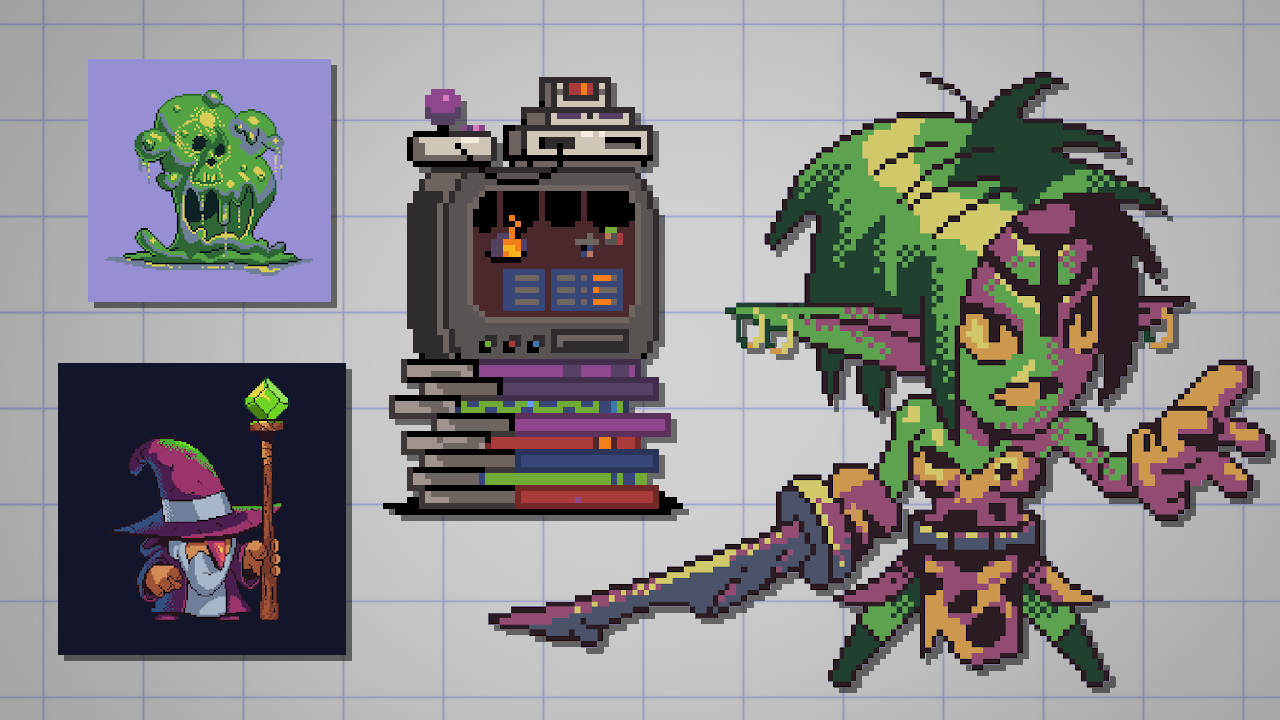
In this article, I'll highlight some characteristics, bones techniques and guidelines so you can first making your own pixel art.
All the information hither can be applied to any 'style' and any software. And that'southward the beauty of this subject.
The technical side of this art grade is important, especially if you lot desire to make an homage of a video game.
But call back that you don't need to forcefulness yourself to create a 32×32 pixel size artwork with merely three colors, if you don't want to.
It'south beneficial to respect the fundamentals and the techniques of old-school digital artists – but information technology'southward not obligatory to work like them.
LEARNING BY DOING
For this article, we'll work on an approachable challenge.
I want y'all to create a 64×64 pixel portrait.
That'due south it!
Y'all can draw yourself, make a fanart or invent a character.
The goal is to create an artwork that can be used used as a social media avatar.
Starting time with a pocket-size (resolution) file size, so the pixel unit of measurement is visible. There's no signal to making pixel art where the pixels aren't axiomatic.
SETTING UP YOUR Canvass
For this article, I'll exist using Clip Studio Pigment.
While there's bully defended tools for making pixel art, you tin utilise any drawing program to follow forth.
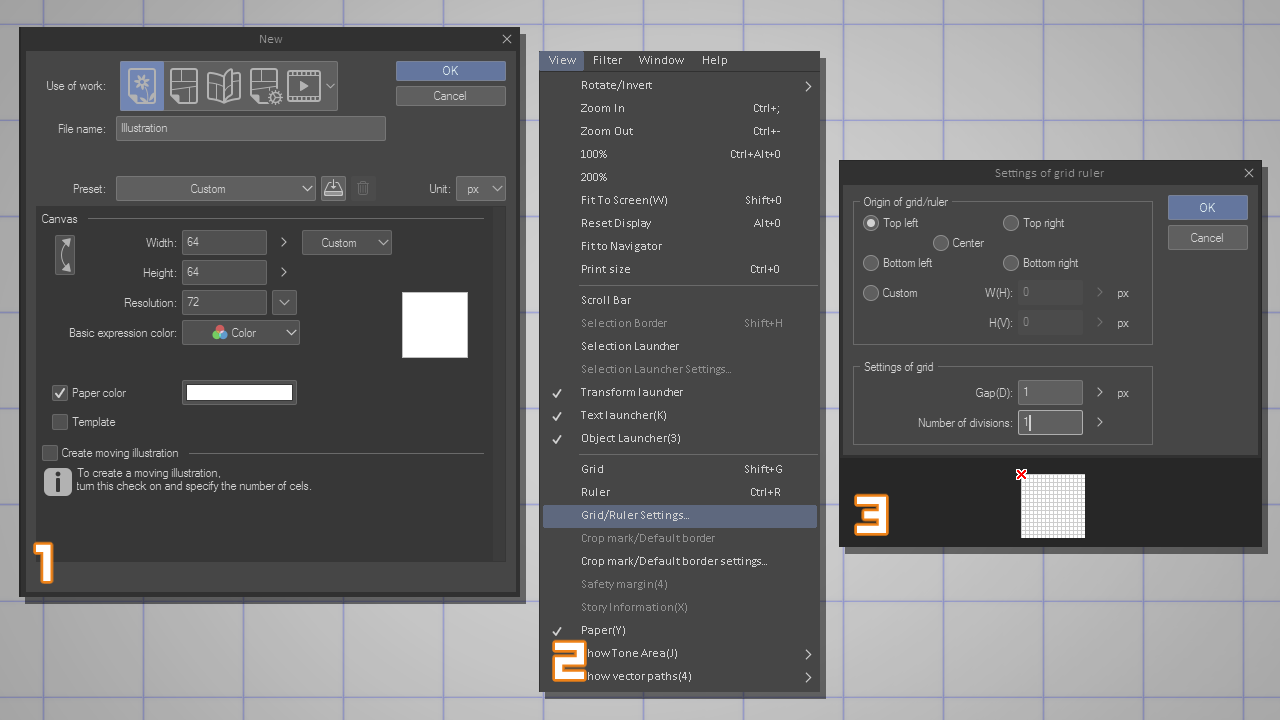
- Create a 64×64 pixel certificate (ane);
- Go to View > Filigree/Ruler Settings (2);
- Configure every bit the following then you tin see a grid with every single pixel. You tin can turn the grid on/off anytime using the Shift+Thou shortcut. (3);
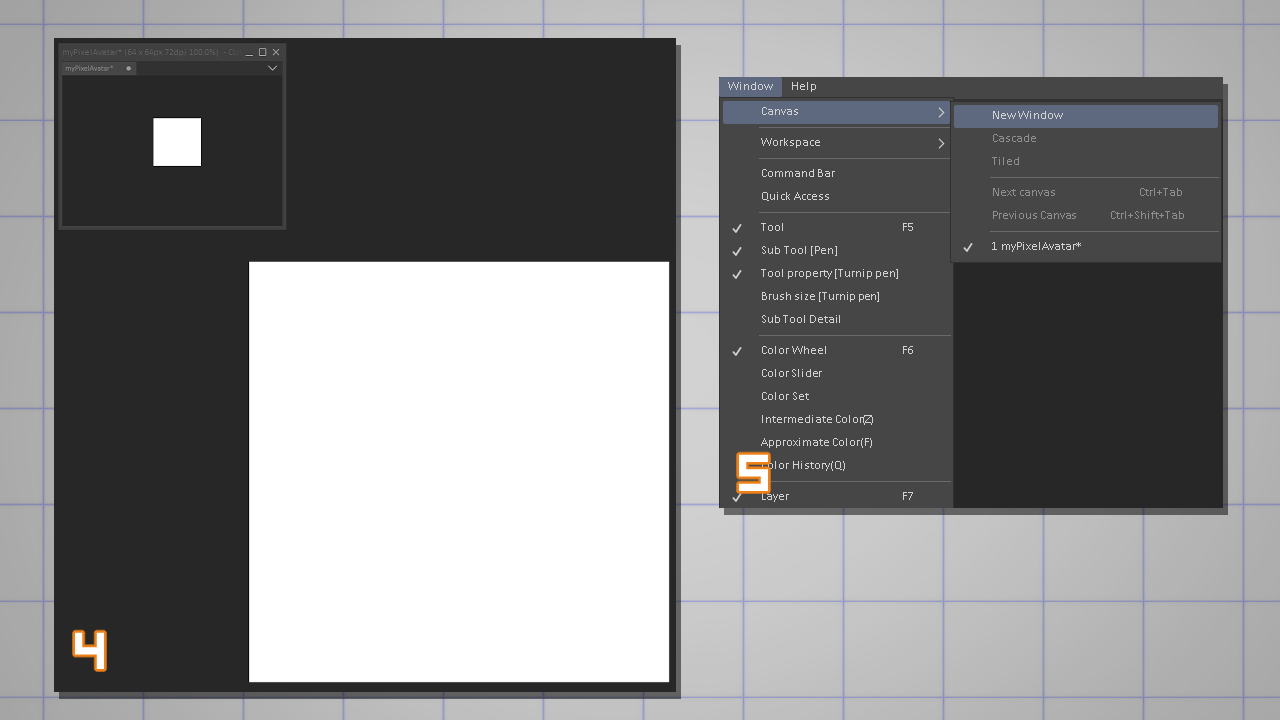
A proficient practice for working with pixel art is getting used to drawing zoomed while keeping an centre on the bodily-size artwork (4);
To create a secondary view of your current sheet, go to Window > Canvas > New Window and open a new instance of the electric current canvas.
Set it to 100% and place in your workspace (v).
CREATING THE PIXEL ART TOOLS
Fourth dimension to introduce a basic concept.
Pixel fine art does not continue with automatic anti-aliasing.
Anti-aliasing is a useful algorithm that smooths edges of a shape.
This is made by calculation an extra row of pixels closest to the aliased edge.
As you can meet in the example, the anti-aliased edge (7) has an automatic slope of pixels to give the shape a smoother profile.
The aliased edge (six) is what we're looking for when creating pixel art. Later, we can soften the edges by adding anti-aliasing past hand (manually).
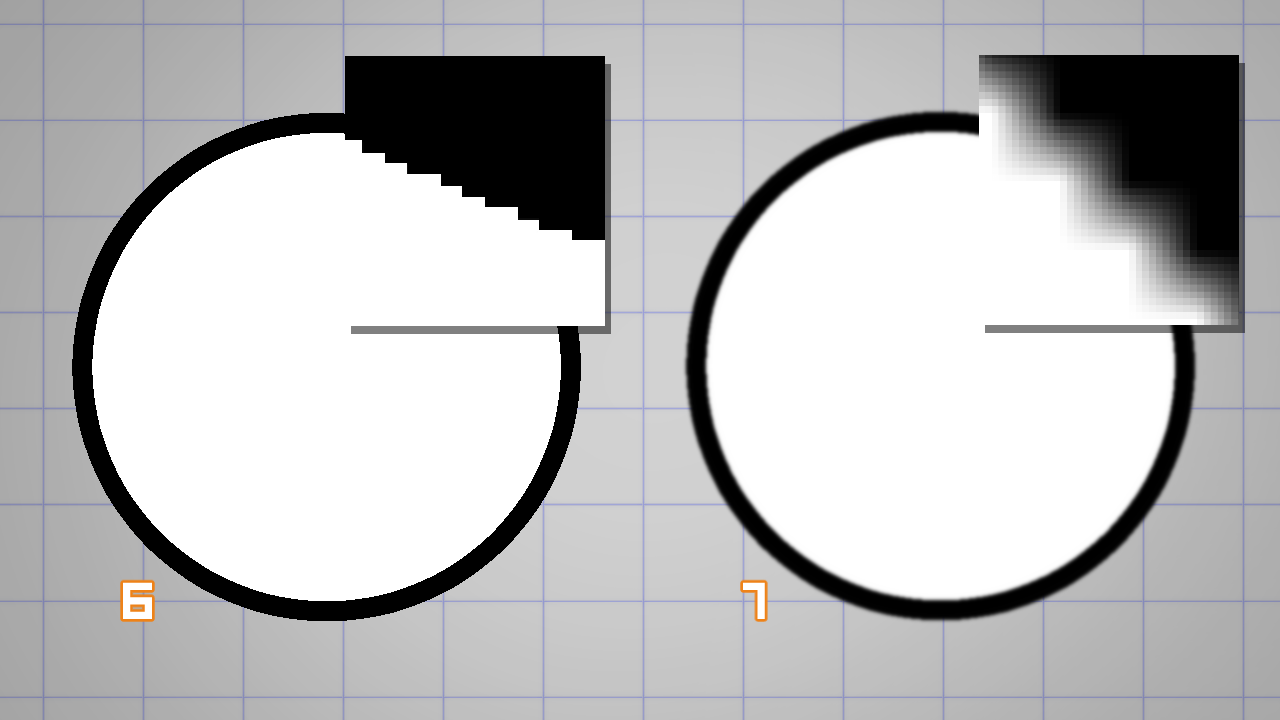
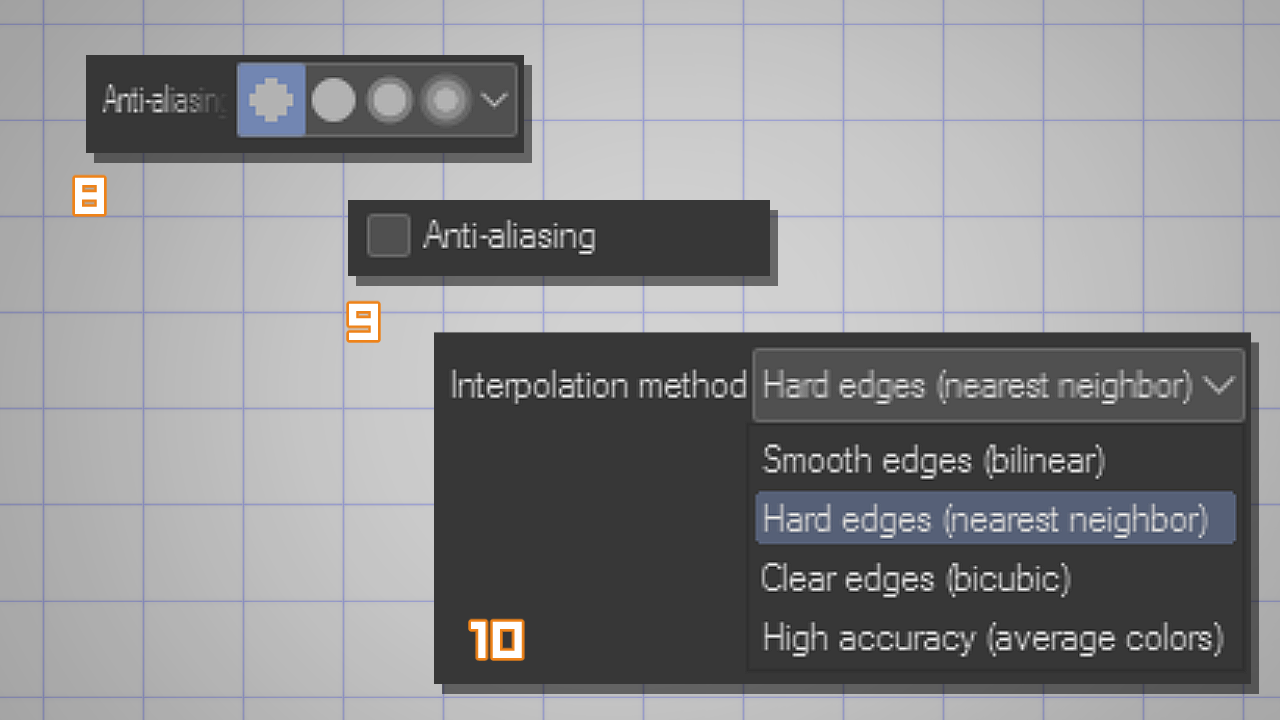
A dominion-of-pollex when using any software to create pixel art is to disable the anti-aliasing setting in brushes, tools and transformations.
In Clip Studio Pigment you have to turn off anti-aliasing in:
- brushes (eight);
- tools like Selection, Fill, Text, eg. (9);
- and during any transformation using Edit > Transform (10);
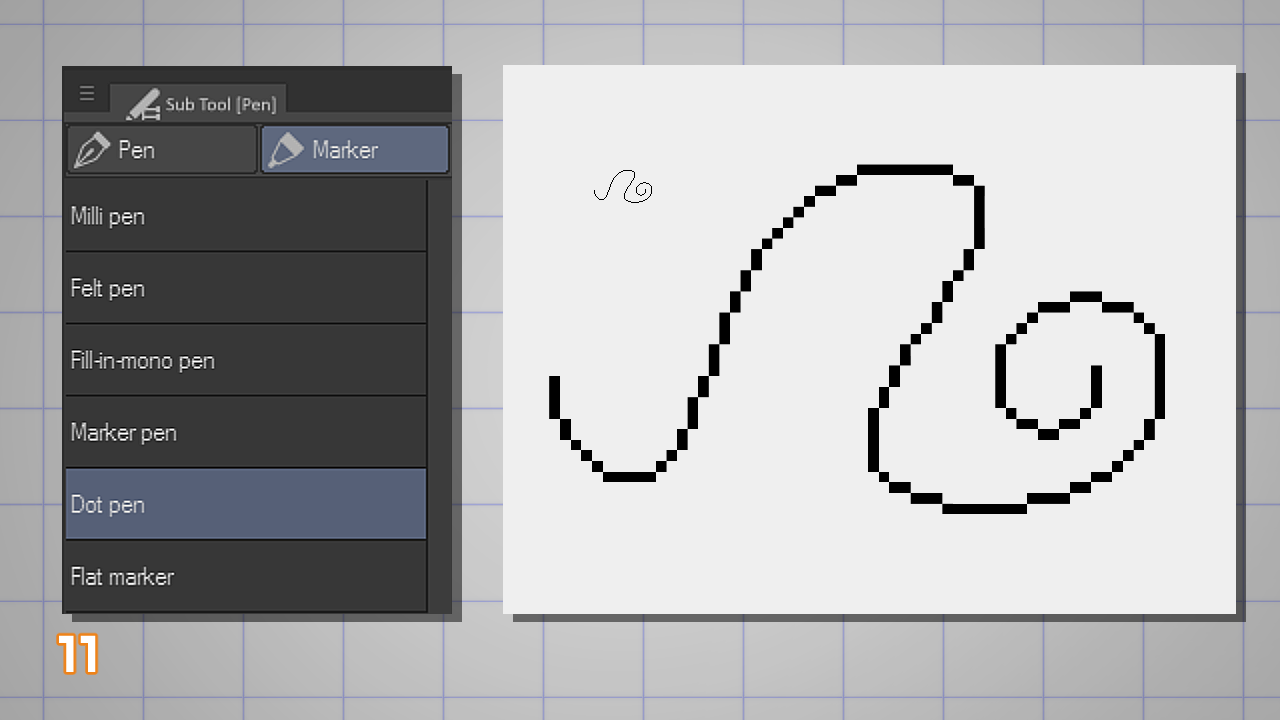
In Clip Studio Paint you already have a pixel fine art pen. It'southward called 'Dot Pen' in the Marker category (11).
This is the simplest drawing brush available. Information technology has a fixed ane-pixel size, anti-aliasing turned off, and no option for stabilization or color mixing.
I suggest yous follow forth this tutorial using this brush merely.
Afterward in the game, you lot can duplicate any of your 'mutual' brushes and apply information technology for pixel art (as long y'all reduce brush size to lower values and disable anti-aliasing).
DRAWING THE LINEART
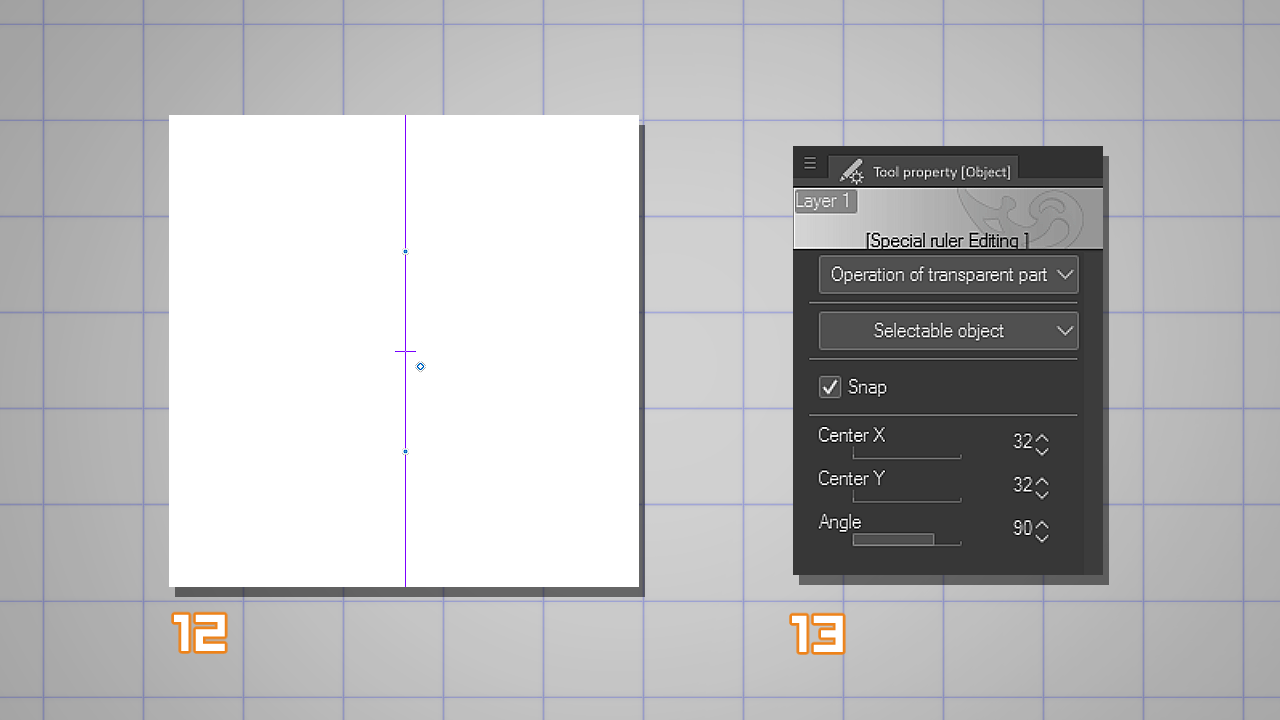
Since this will be a front-facing portrait, I'll start the drawing using the Symmetrical Ruler (12);
Identify the Symmetrical Ruler on the Canvas and, to make sure it's on the dead-centre, use the Object tool to select information technology and input values manually (13);
In this case I changed the Heart X and Eye Y values to 32, which is half of my total canvass size (64 pixels).
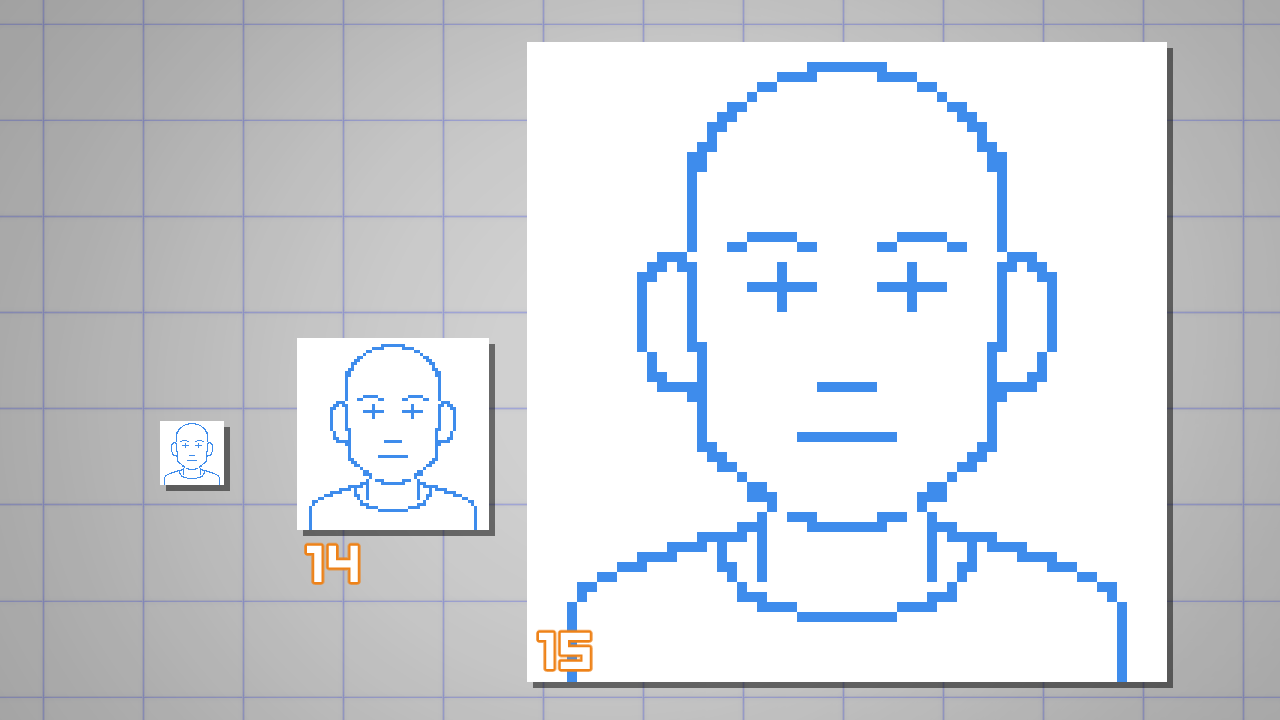
Now, select your Dot Pen again and showtime cartoon.
Since this brush can't be resized, information technology's a practiced thought to zoom in on the sheet you lot're drawing (15) and utilise the duplicate view as a reference (14).
I started my portrait cartoon a initial sketch to discover the construction of the caput (16) and then I started calculation details (17).
There's no need to utilise a blue colour. I only prefer it because it helps my encephalon empathize that I'thousand creating a rough for my final drawing.
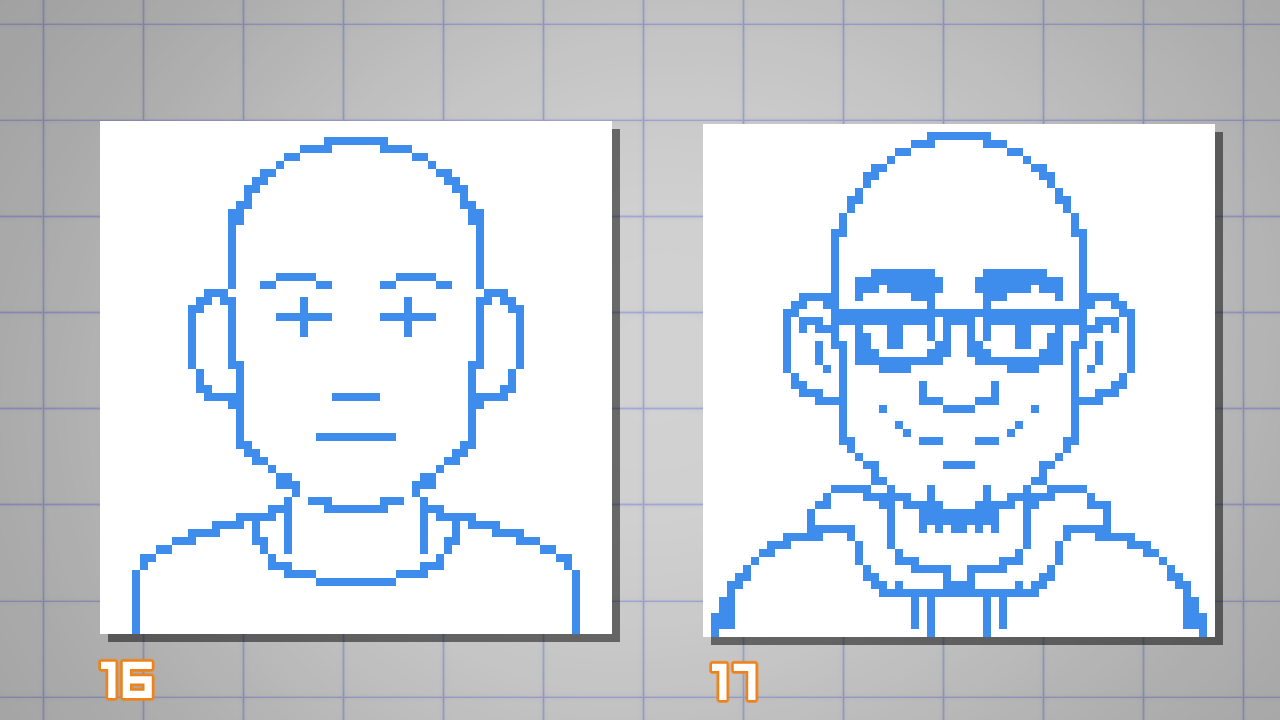
If you're done with the sketch yous can proceed with the linework.
Before adding the final lines, let me evidence you a elementary technique for drawing lines and curves in pixel art.
In the example below, the linework (eighteen) doesn't expect smooth because there'due south a lot of duplicated pixels where it should exist a unmarried pixel line.
You tin can fix those 'doubles' (information technology's a term) by removing any adjacent pixels on the curve. In the case (19), I removed all pixels marked in red.
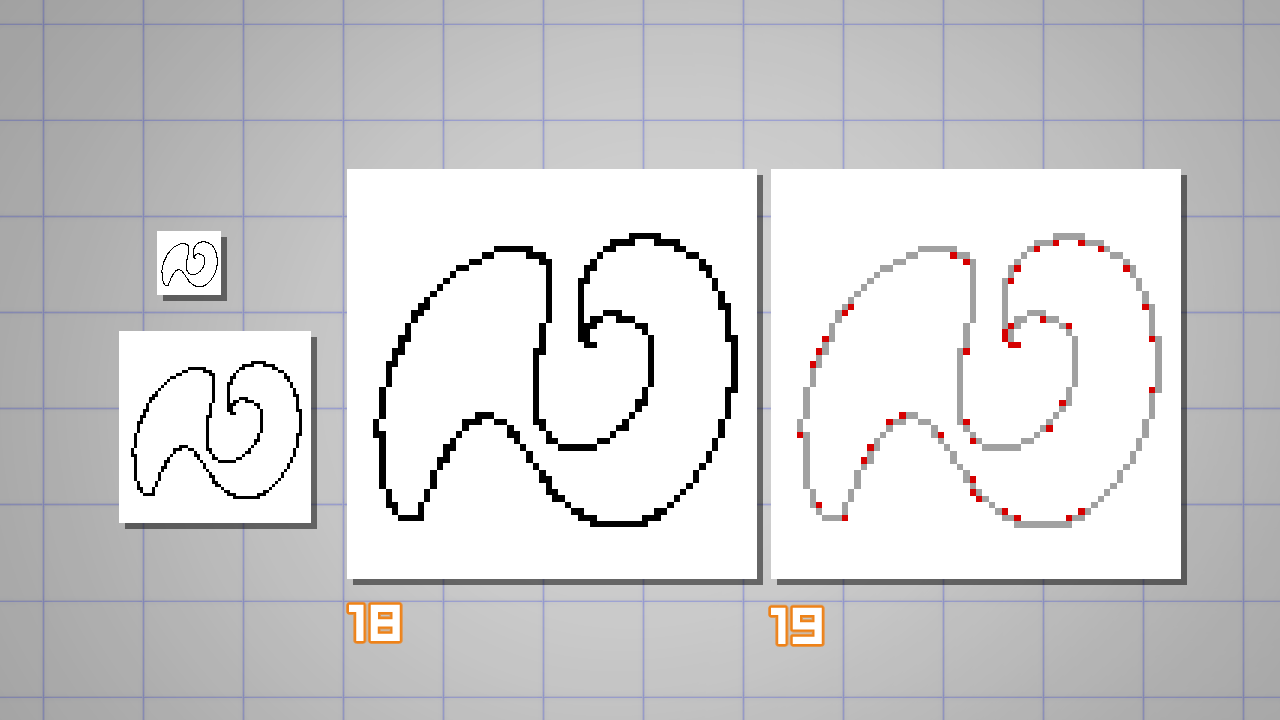
I suggest you to return to your sketch and look out for those 'doubles' to make clean your linework.
Do not worry if the curves don't experience right. But remove the unwanted pixels.
TIP: if you lot need to erase a pixel, you can simply switch to the transparent color (I have my shortcut ready to Ten);
In the example below you lot can come across the difference of the initial sketch (20) and the cleaned-up version (21).
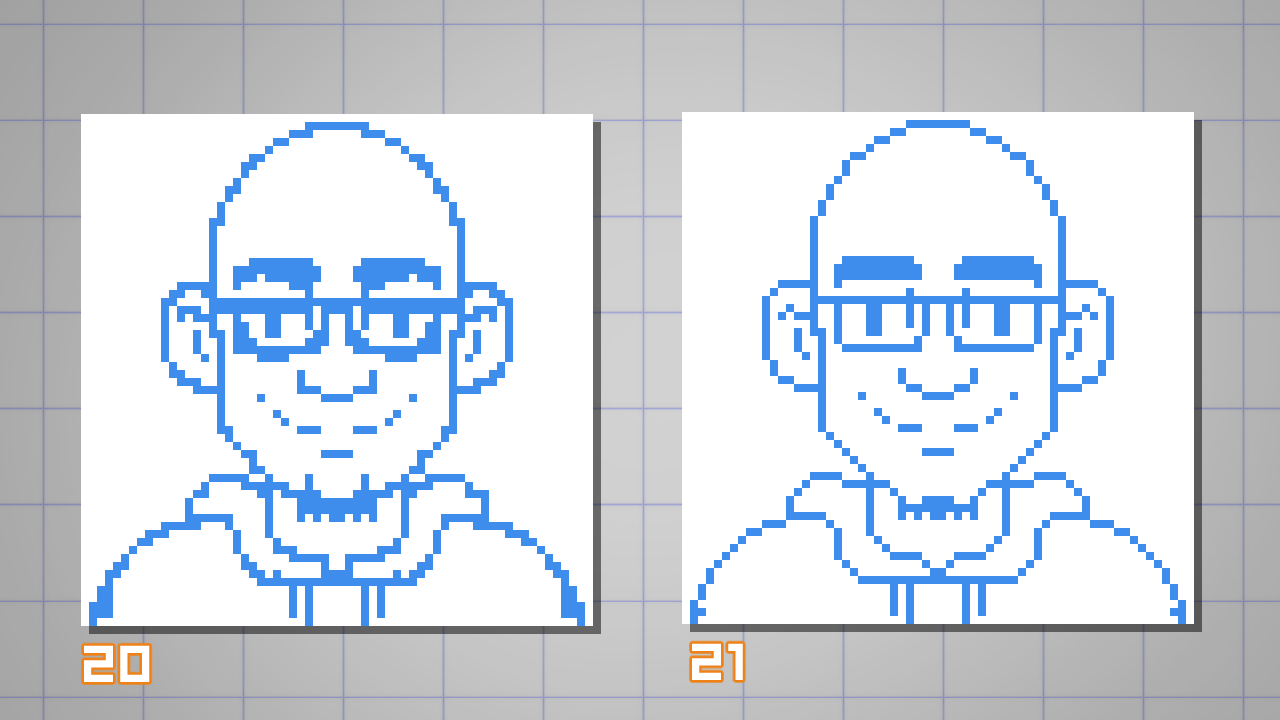
Ready for another technique?
Allow's start fixing the drawing and adjusting some curves.
Seeing the example below (22), yous tin notice the distribution and spacing of pixels are non following a logical progression. (eg.: iii, 2, one, 4…)
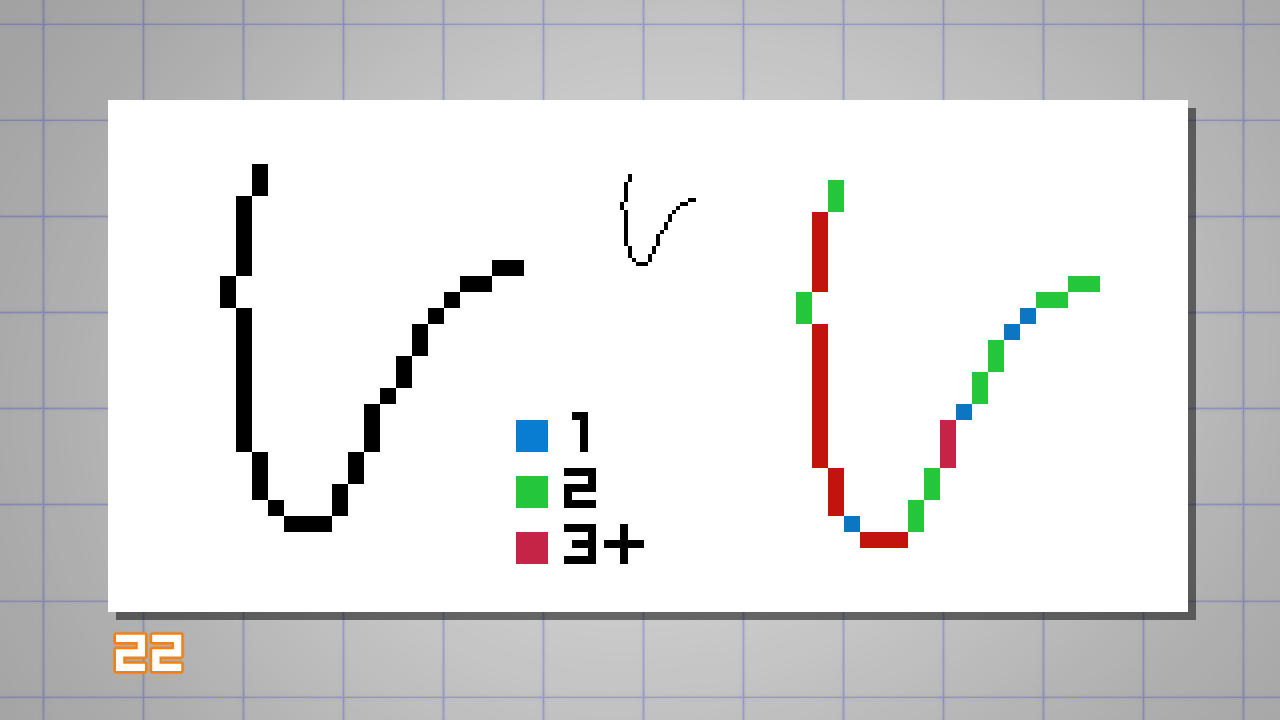
While on this improved version (23), you can see a ameliorate progression of pixels to create the curve. (eg.: 1, 2, two, 3…)
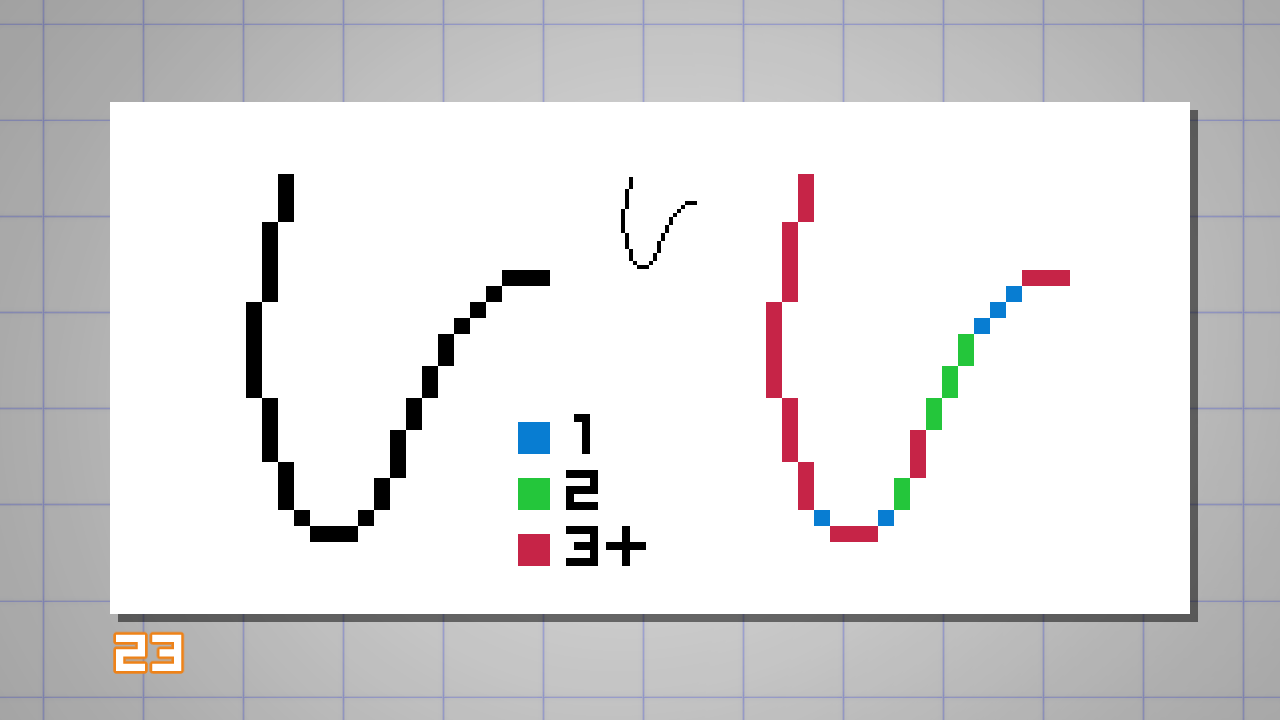
With that knowledge, I suggest you to try the following exercise before continuing on your drawing:
Endeavor to describe some random lines and curves with the two concepts yous just learned so far: remove the doubles and maintaining the 'pixel progression'.
This will give you a solid gasp in how to contour shapes in pixel art.
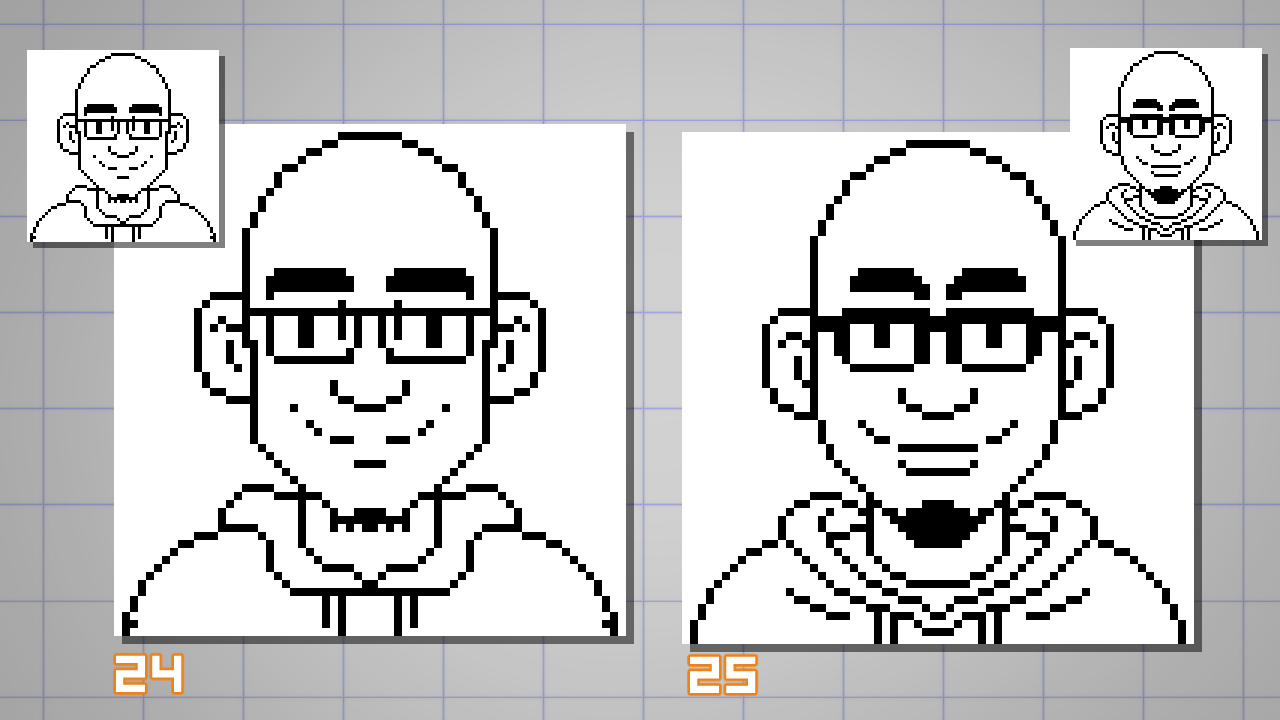
Below is my concluding linework (25).
I did some pocket-size adjustments on the proportions and curves, and removed some unnecessary pixels to brand the face more readable.
Accept some time to compare with the original version (24) and attempt to find where I applied the techniques.
COLORING Fourth dimension
The number of colors used on a sprite (term used to describe an object in game development), depends by how much you lot want to stay close to a specific limitation of an sometime technology.
While not necessary, yous can learn a lot almost pixel art by limiting yourself to a pocket-sized amount of colors to choose.
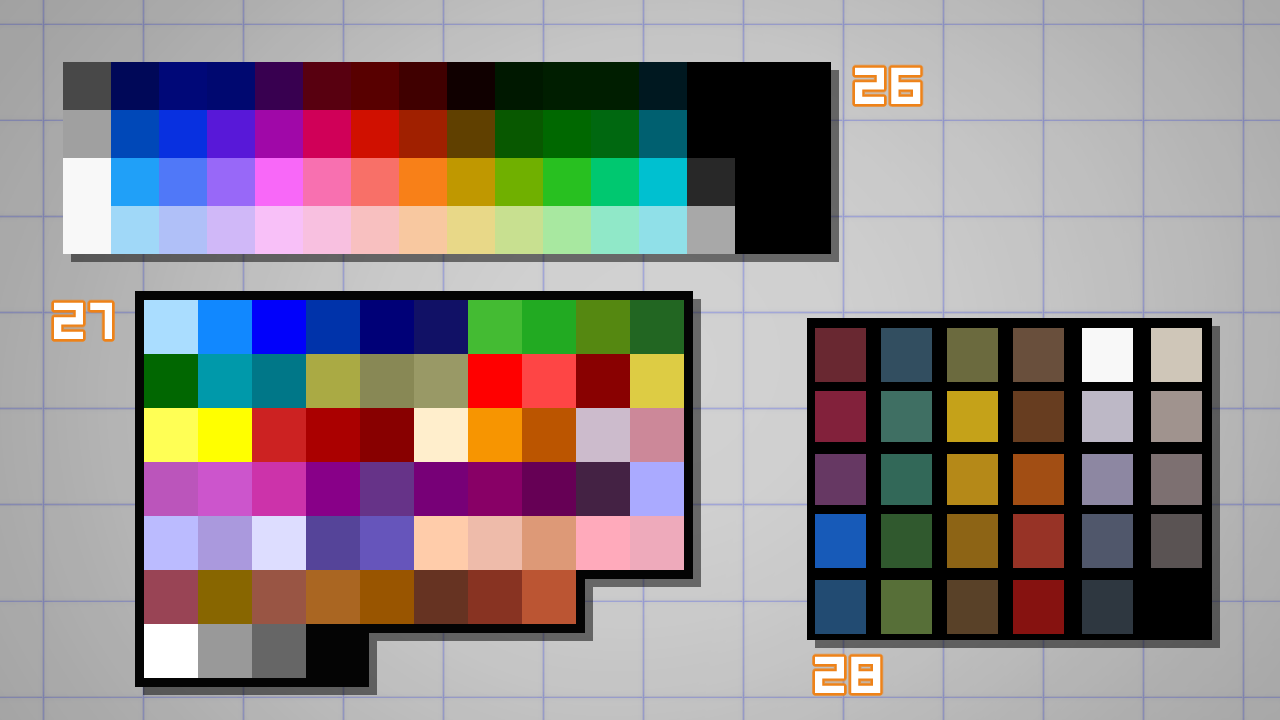
For now I suggest you start with a simple color palette. Equally a starting indicate, you can employ the 56 colors of the palette used past the NES (Nintendo Entertainment Organisation) videogame console (26).
The color and tone choices on this palette are non perfect, simply it provides a good starting point.
In the examples below you have the PC-98 figurer color palette (27) and a personal one I built in the by (28);
Later you can first building your own palette, but always remember to proceed it tight and simple.
I start by filling my lines with some base colors (flatting).
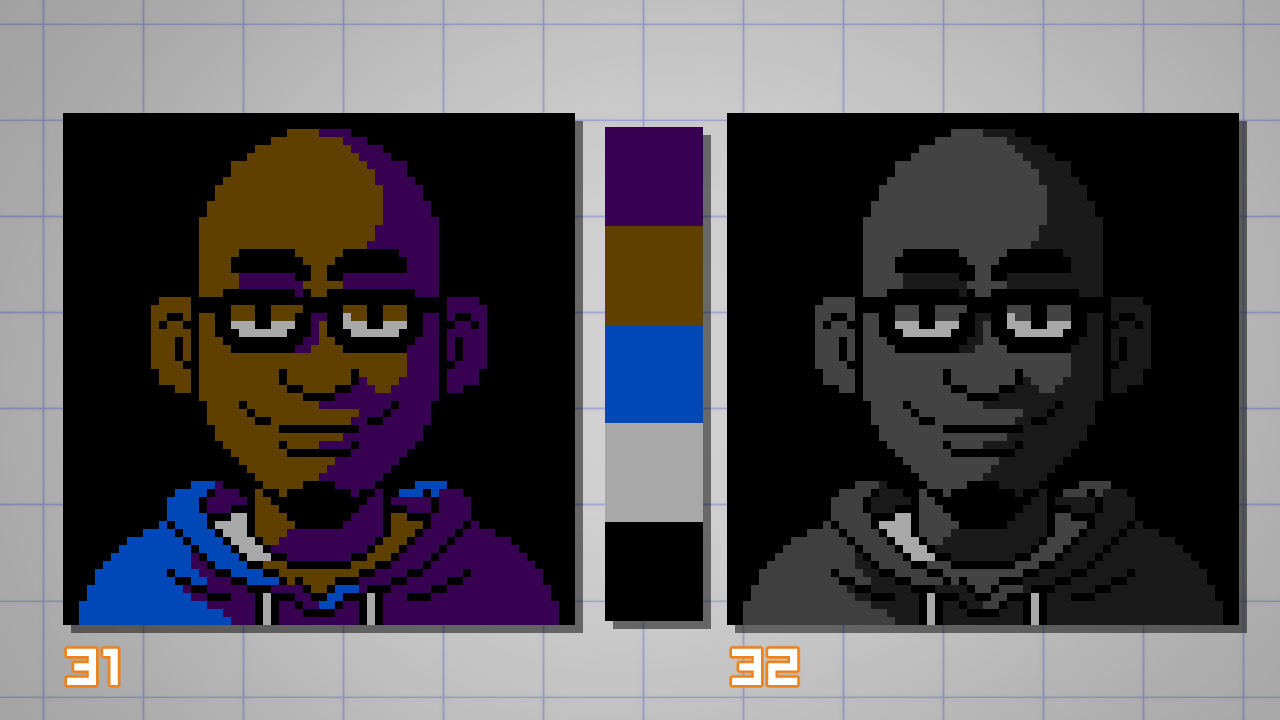
I'm starting with v initial colors, including the black linework to paint this portrait (29).
On this stage, remember to configure your Auto Select and Fill tools for the pixel fine art workflow, disabling Area Scaling and Anti-aliasing (30).

To shade (add shadows) the skin colour on the portrait, you don't demand to only utilize the darker value of a specific color;
I can potentially use whatsoever color bachelor every bit long the values read correctly.
Hither's a tip – Create a new layer on top of your layer stack, fill it with blackness and set the layer style to Color.
Now you can use this layer to cheque the value relationship of your colors (32).
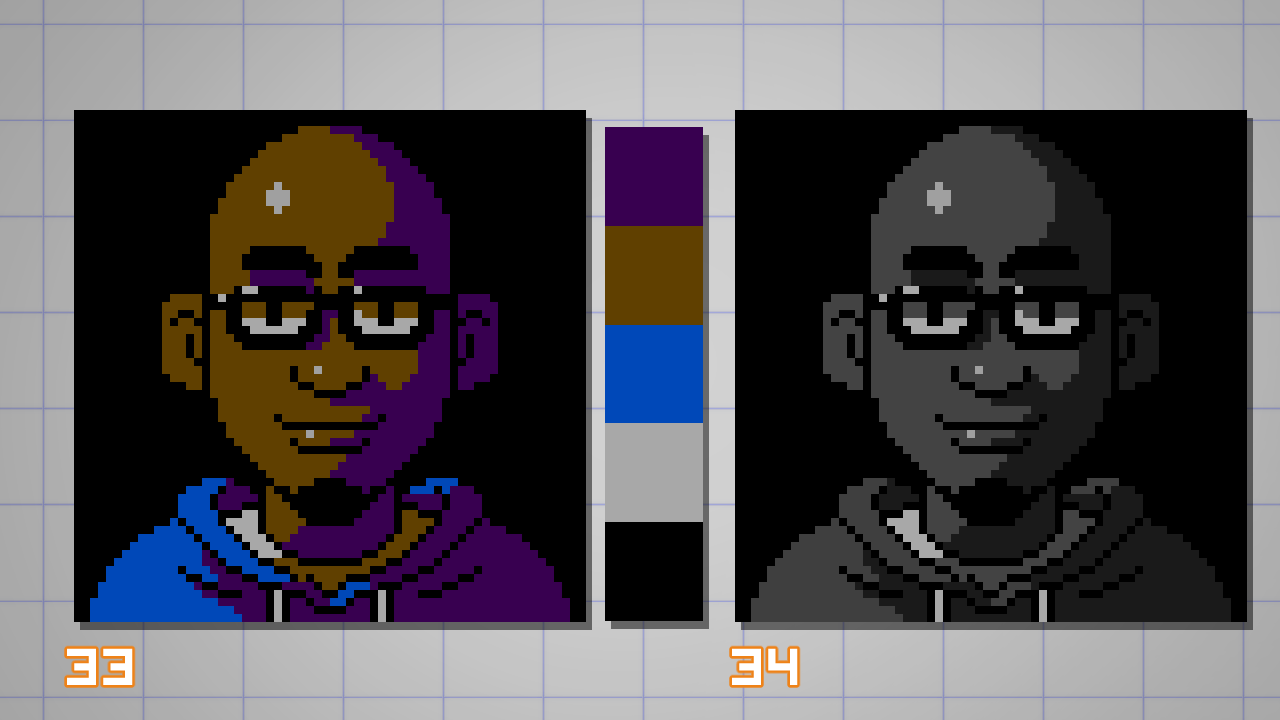
In the example below y'all can run across how I managed to utilise the old background colour (regal) equally the shade color of my dark-brown skin (31). I prefer to go with a black background to save one colour…
Again, I don't demand to – but I'd like to exercise these limitations imposed by the NES color palette.
For the highlights on the skin and glasses (33), I don't needed to introduce whatsoever new colors considering, while checking the grayscale values (34),
I noticed the colour of the t-shirt could be used for that.
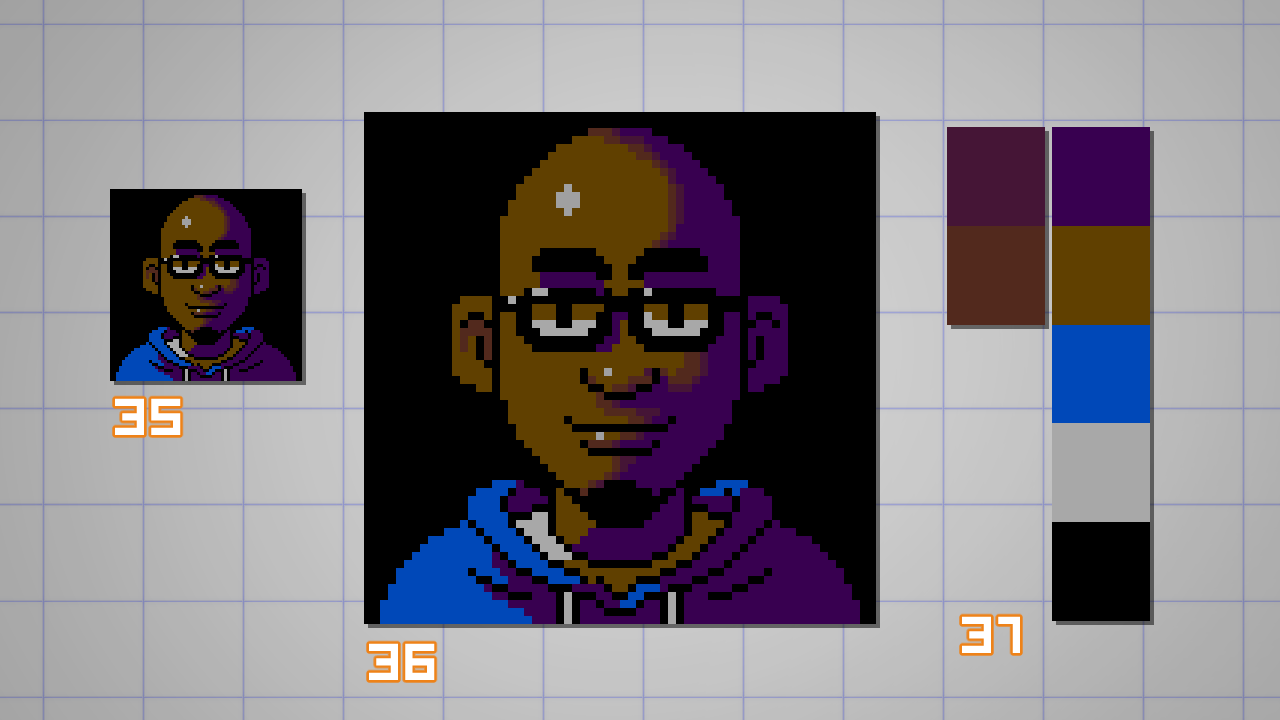
I wanted to add some manual anti-aliasing to smooth the border betwixt the lit and shadowed areas of the skin (36).
Using the NES palette only, I could not observe colors that I could use to create this gradient transition.
So here's where I abandoned the 'virtual limitations' in favor of the artwork.
In the example I added two new colours (37), and so I tin add together more details to the shading.
I can't stress this enough, just it's really important that you make these decisions while looking the artwork through the real, not zoomed-in, sheet size (35).
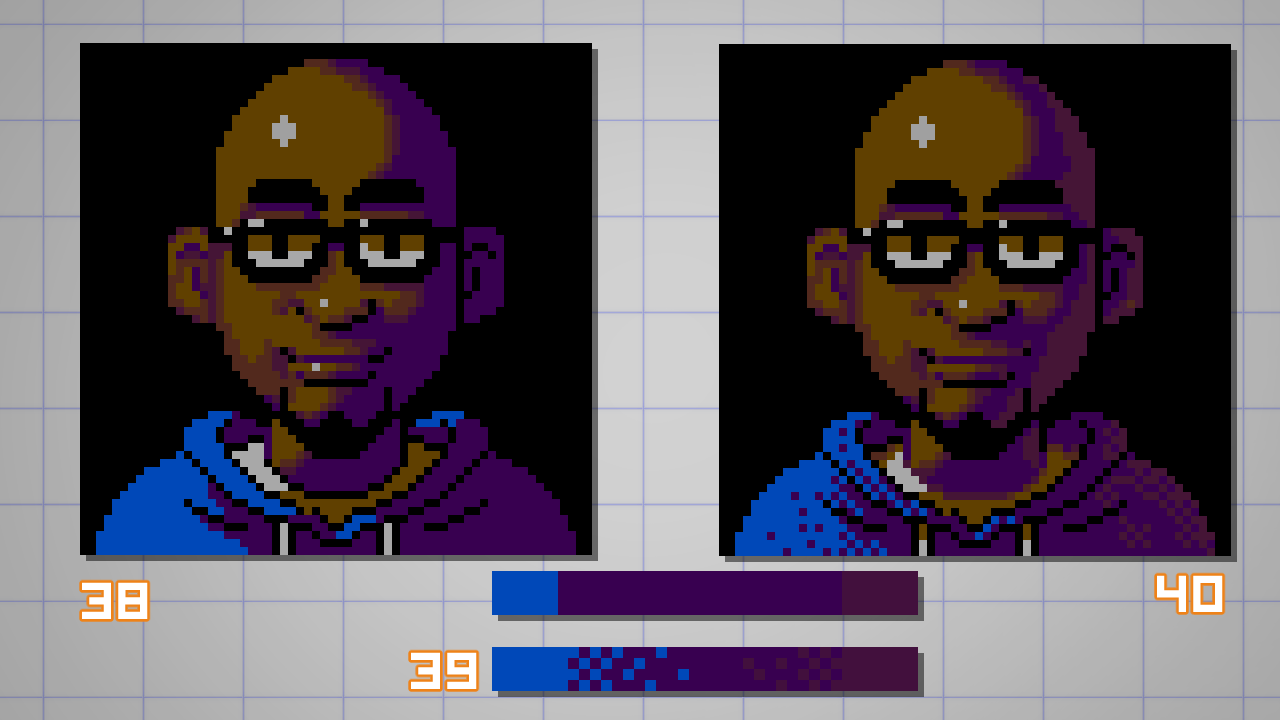
Using the two new extra colors, I increased the rendering on the face up adding more book, wrinkles ('crusade I'm getting old) and softening some shadows on the lit side of the portrait (38).
On the blueish jacket, I decided to use the dithering technique to create the sensation of a gradient without calculation colors (xl).
By breaking up the solid transitions on a checkerboard blueprint I can brand the illusion of an inbetween color (39).
Dithering is an advanced technique and this is just a basic usage for it.
Every bit you tin can see, the upshot creates a textural event that tin exist a problem if used on skin or smooth surfaces.
I found it appropriate to use in the jacket (fabricated of material), because I can do good from the rough texture.
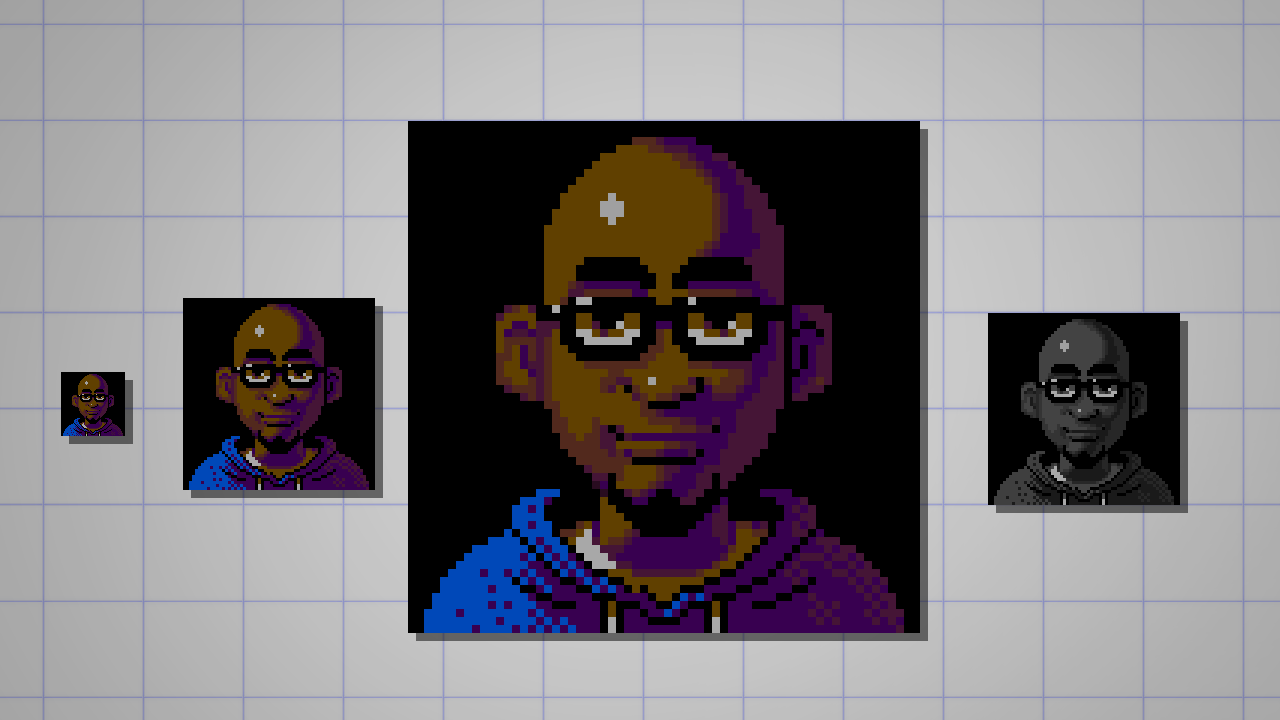
Afterward some tweaking, I managed to fully paint the portrait.
I'chiliad very happy with the final result considering I could fit a lot of details for a 64×64 pixel size artwork with only 7 colors.
ps.: I also had pixels and colors enough to fix those weird-looking cartoony optics. X-D
EXPORTING
Last, but not least…
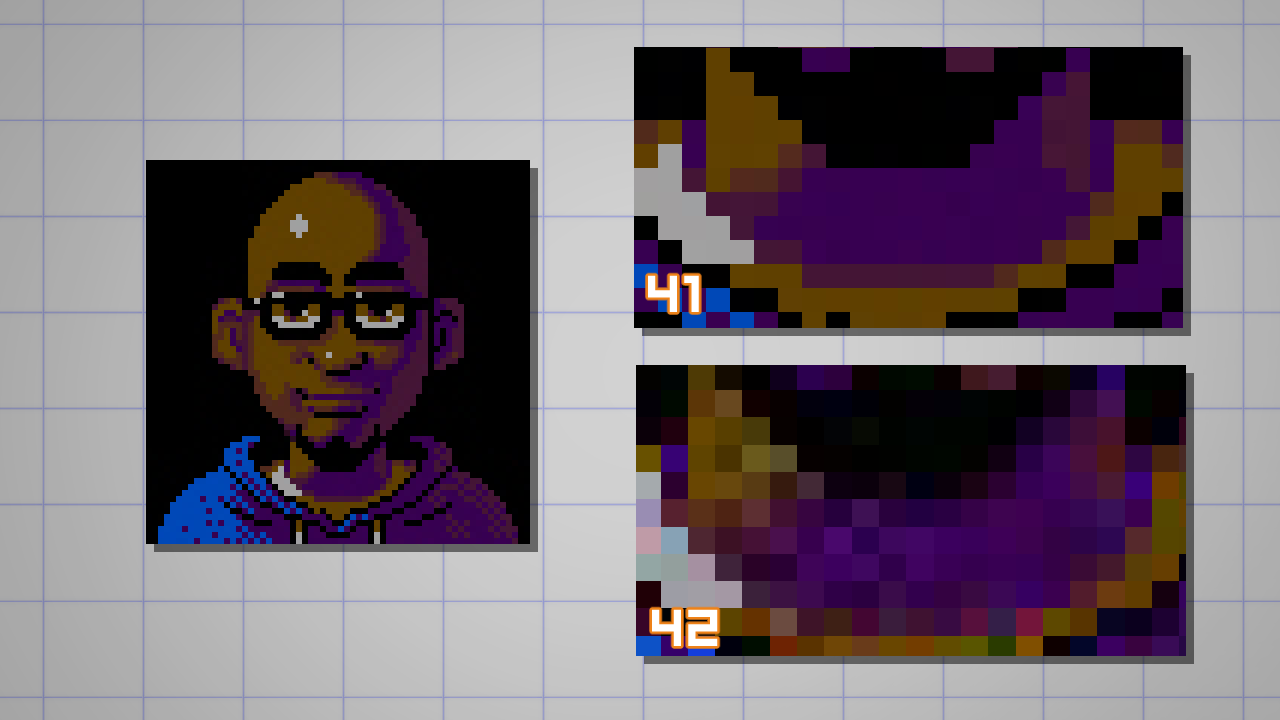
When saving and exporting pixel fine art, use the GIF or PNG format.
Avoid using the JPEG format, peculiarly with whatsoever level of compression.
This will destroy all the love and intendance yous used to create your pixel art.
Await at the examples below: a 99% compressed JPEG (41) may look ok from a altitude, but it adds some non-wanted colors.
A 80% compressed version (42) will make whatsoever pixel artist bleed. So please, don't practise that. 🙂
When it comes to posting on social media, you accept to deal with the automatic-compression of the platform.
For Instagram, you'll have no option because the system automatically converts and resizes the prototype to a low-quality jpeg.
On Twitter, you'll have a sharper, near perfect image if the exported file is 506 pixels wide in PNG format.
That's it.
I hope you enjoyed this tutorial and also hope y'all managed to create your first pixel art portrait.
Below you can find my minuscule, withal incredible, piece of art. 🙂

If you create yours, please let me know.
– dado
Creative person Profile
Hi. I'grand Dado (Dadotronic) Almeida and I describe and paint 90's-videogame-inspired art. As a freelancer artist I create concept and production fine art for games and animation.My indie career is devoted to personal projects similar Claws and Tusks (comic) and artwork that I brand for fun or commissions. I also like to teach and share my discoveries most digital art, computer graphics, and mental health for artists.
https://www.dadoalmeida.com/
https://twitter.com/dadotronic
https://www.artstation.com/dadotronic
Source: https://www.clipstudio.net/how-to-draw/archives/161082
0 Response to "How to Create an Animated Show Using Pixel Art"
Post a Comment